The Dangers of Untreated Hearing Loss

Many people notice a slight change in their hearing and put it off. “I’ll get my hearing tested later,” or, “It’s not that bad, so I’ll just live with it.”
But did you know that even minor hearing loss can cause significant mental and physical consequences? Here’s why untreated hearing loss can be a hazard to your well-being.
Don’t Delay a Hearing Loss Test
Like many age-related issues, hearing loss can happen slowly. So slowly in fact, that hidden hearing loss can be truly hard to notice.
It’s rare to experience sudden bilateral hearing loss—and if you do, you should consult with a hearing professional immediately. For most people, though, hearing loss can progress at such a pace that it may be difficult to notice.
You may find that you’re turning up the television a little louder, or you’re missing parts of a conversation (or your partner seems to be mumbling or speaking too softly). These changes might not be obvious.
But there are many reasons why you shouldn’t suffer in (literal) silence. A simple hearing test is free. Unfortunately, many folks delay it for months and even years, believing that their hearing issue isn’t that bad yet.
Our ears allow us to hear, but actual understanding happens within our brains. That means when we don’t hear, understand, or comprehend what others are saying, it can start to have a ripple effect on our wellness and quality of life.
The Power of Understanding
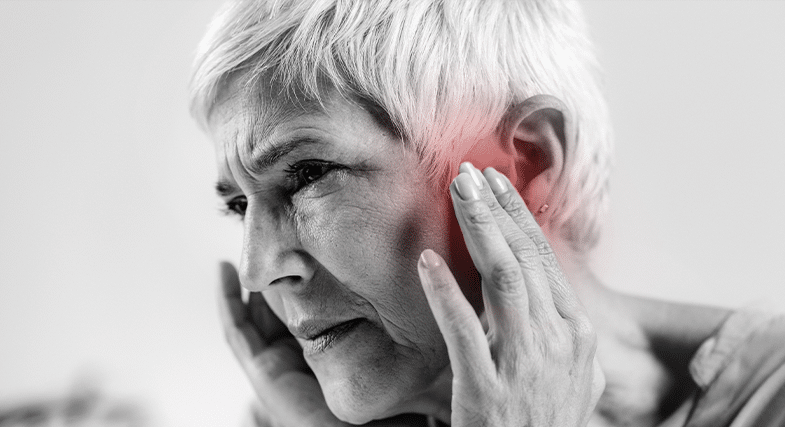
When you lose your hearing over time, your brain slowly loses some abilities, too—such as recognizing certain sounds and connecting certain words. People may often feel like they can still hear—they know that conversation is carried on around them—but they don’t always understand what’s being said.
Researchers have linked untreated hearing loss to many very serious health issues, including Alzheimer’s and Dementia, but even minor untreated hearing loss can be harmful to your overall health.
Early detection through a simple hearing test can help you avoid more serious issues like these later in life. We’ve all heard the phrase, “use it or lose it,” and when it comes to our cognitive abilities and brain, we can lose our ability to understand over time. There have been numerous aging studies by medical professionals, including the National Council on Aging [1], that have underscored the link between untreated hearing loss and decline and a variety of health and social issues.
Issues Linked to Untreated Hearing Loss
The truth is that researchers are still exploring the profound impact of untreated hearing loss on older adults. In their studies, a number of key and common issues have come forward. As studies continue, there will likely be more to add to the list.
The issues linked to untreated hearing loss are wide-ranging and impact many aspects of a person’s emotional, cognitive, and physical well-being.
1. Depression
Hidden hearing loss often leads to social isolation and diminished communication. These issues are linked to risk factors for depression as well. People with hearing loss may feel disconnected from those around them, making them feel sad and hopeless—leading to an increase in depressive symptoms.
2. Irritability and Anger
It’s natural to feel frustrated over a struggle to hear, which can make us quicker to anger or feel irritable with our family members, spouse, or friends. Frustration over misheard and unheard communication causes emotional strain that can affect personal relationships and lower the quality of our connections.
3. Fatigue and Stress
Constantly straining to hear conversations and sounds requires additional focus and mental effort. It’s exhausting! That’s why untreated hearing loss can lead to fatigue. Exertion and worry can exacerbate stress as folks worry about the critical information they may have missed or miscommunicated.
4. Isolation, Avoidance, or Withdrawal from Social Situations
Do social activities seem less enjoyable? Difficulty hearing can be embarrassing—you don’t want to ask someone to repeat themselves over and over. Instead, folks with untreated hearing loss may avoid gatherings and crowds. They can become withdrawn, and this isolation increases feelings of loneliness.
5. Reduced Alertness Resulting in Increased Risk to Personal Safety
Not only does untreated hearing loss put your social life at risk, but it can diminish your ability to detect important warning signals, instructions, alarms, and other concerns (like approaching vehicles or dogs). By reducing alertness, untreated hearing loss can lead to a higher risk of accidents and injuries.
6. Impaired Memory and Ability to Learn or Retain New Information
Hearing loss is associated with cognitive decline, including impaired memory. It can make it tougher to hear, learn, and retain information. The increased cognitive load required to process and decipher sounds can detract from other mental functions.
7. Reduced Job Performance and Earning Power
A study in the UK found that 35% of working adults there experienced hearing difficulties at work [2], causing 15% to feel their performance is impacted. No matter where you are, it’s important that employers accommodate hearing loss, but untreated hearing loss can hinder workplace communication. This may inadvertently result in misunderstandings, decreased job performance, and even limited career advancement opportunities.
8. Diminished Psychological and Overall Health
When we experience stress like untreated hearing loss, the cumulative effects (social isolation, depression, cognitive decline) can lead to a lower sense of well-being overall. The impact on psychological and overall health is significant.
9. Increased Hospital Stays
Some studies have discovered that untreated hearing loss may even contribute to or be related to other health complications. These health complications may necessitate longer hospital stays [3], especially due to accidents or misheard medical instructions.
10. Higher Risk of Falling
Researchers have also linked hearing loss to an increased risk of falls [4]. Although the exact causal relationship isn’t completely understood, it is theorized that it may involve reduced environmental awareness and/or balance issues. Getting the proper diagnosis and treatment for your hearing loss is critical to mitigate your risk and maintain (or even improve) your quality of life.
Treating hearing loss isn’t just important to improve social interactions and potentially help ward off cognitive disorders. It can also help improve personal safety.
According to the US Fire Administration, millions of hard-of-hearing Americans are unable to hear the warning sounds of a fire alarm. The Hearing Loss Association of America (HLAA) [5] asserts that people have died in a fire because they could not hear or wake up to fire alarms. This has also been supported by studies done by the Fire Protection Research Foundation (FPRF) [6], a nonprofit organization which provides practical data on fire and building safety.
Hearing loss also makes it difficult to hear important announcements, instructions, sirens, and traffic signals, which could put you and your loved ones in danger as well.
It’s important to remember that when someone has hearing loss, they aren’t the only ones affected by it – everyone around them is also affected.
Others may find it difficult to cope with a person’s hearing needs and may find themselves talking louder, repeating themselves, or gesturing more to help communicate better with someone who can’t hear well. This can be very frustrating for all involved and may cause unfortunate strain on relationships. They may also stop attending family or social gatherings and isolate themselves more too. This can be incredibly emotionally upsetting to the sufferer and those around them.
No one should suffer in this way if their hearing can be helped. It all starts with a hearing test to fully understand what is being heard and understood and what isn’t.
[1] How to Talk About Hearing Loss (NCOA)
[2] The Silent Employment Crisis” How Hearing Loss Impacts the Workforce (HR Review)
[3] Patients with Untreated Hearing Loss Incur Higher Heath Care Costs Over Time (Johns Hopkins)
[4] Hearing Loss and the Increased Risk of Falls (ASHA Leader)
Are you ready to take the first step to better hearing?
Contact your nearest office for a consultation
Beltone Hearing Aid Product
Beltone offers a wide range of hearing aids that fit every hearing loss, lifestyle, and budget. We offer both prescription and over the counter (OTC) hearing aids with features to make listening and adjustments effortless. Bluetooth low energy streaming compatibility allows you to take calls and listen to music directly through your hearing aids. Adjustments on the go are also as simple as a touch of a button when using our HearMAX App. Not sure which hearing aid is right for you? That is what we are here for! View ProductsNot sure what kind of hearing aids are best for you?
Contact your nearest office to schedule an appointment.