27601
Close×

Schedule Your Appointment

  1. Basic Info
  2. Select Location
  3. Select Date

Noise Levels and Protecting Your Hearing


October 16, 2023


Woman holding her hands over her ears.

How Loud is Too Loud? How Noise Levels Affect Hearing

Our everyday lives are full of noise, some of which has the ability to damage our hearing. And because our hearing is a depreciating-only asset, it’s incredibly important to protect and maintain what we’ve been given!

The volume of noise is measured in decibels (dB), and our ear anatomy begins to show signs of damage when exposed to sounds 85 dB or higher. To put this into perspective, average home noise such as cabinets closing, footsteps, background TV or music, etc., all live within the 40 – 60 dB range. When you head outside to mow your lawn, your lawn mower can reach decibels within a range of 80 – 89 dB!
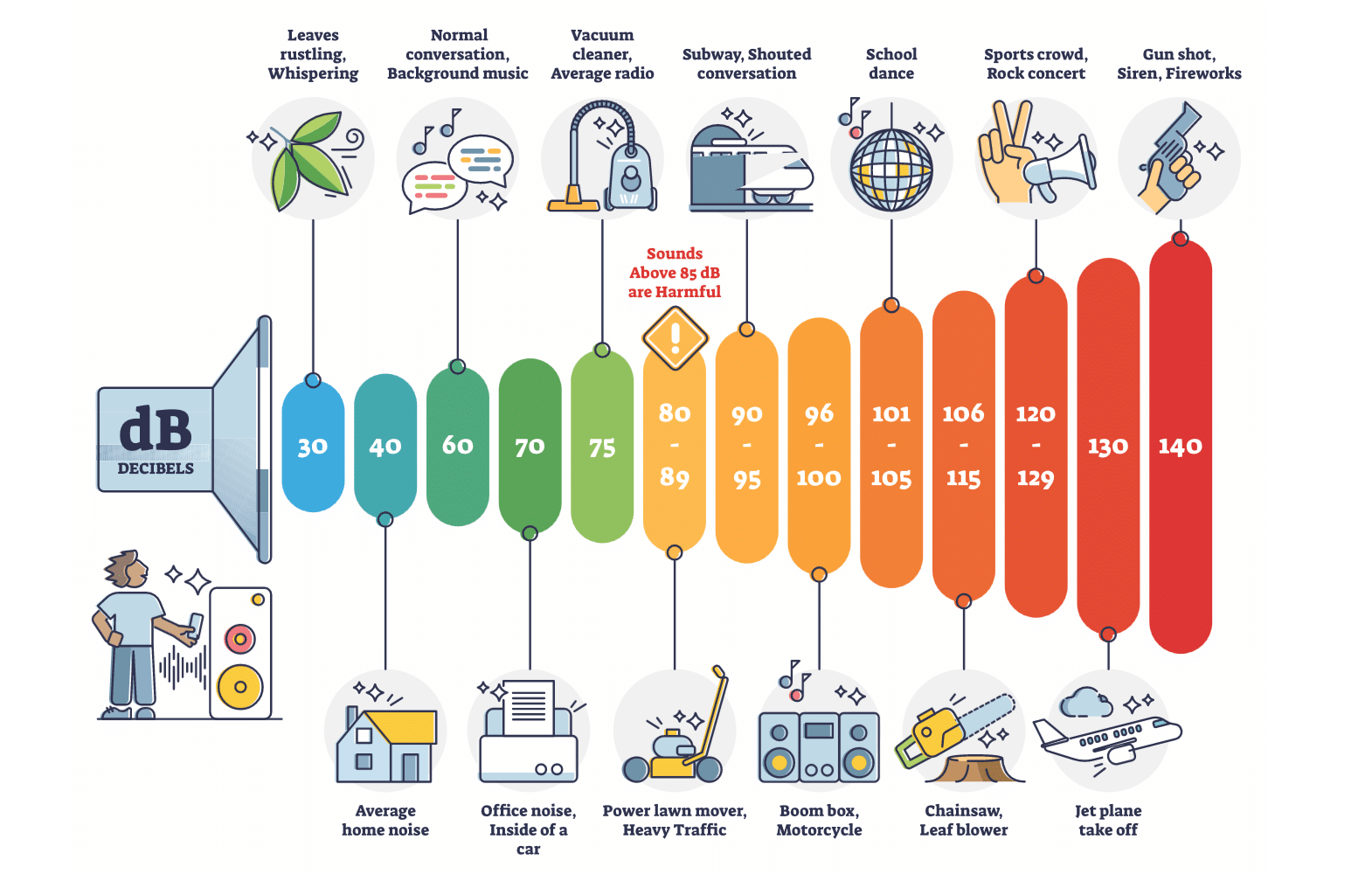
The fall season is nearly here, and with it those pesky piles of leaves in your yard. When it comes time to find your trusty leaf blower (106 – 115 dB), be sure to protect your ears with simple in-ear plugs, or noise-reduction ear muffs.

When hearing loss is experienced, it’s common for the one experiencing it to simply turn up the volume of things, like their TV, earbuds, and cell phone. This unfortunately exacerbates the problem and can lead to further aggravated hearing loss. If you find yourself having to crank the dial, it may be time for a hearing exam. The silver lining is that with Beltone, hearing exams are completely painless and absolutely free.

A Decibels Graph shows the different noise levels of common every day sounds and the impact it has on your hearing.

Refer to the handy decibel diagram above to get comfortable with your decibel levels, and to stay ahead of hearing loss due to noise damage!


Go Back to Posts

Are you ready to take the first step to better hearing?

Contact your nearest office for a consultation